

Bài tập Tiếng Anh Lớp 11 Global Success - Unit 6: Preserving our heritage (Có file nghe và đáp án)
 17 trang
09/11/2025
15088
17 trang
09/11/2025
15088
Bạn đang xem tài liệu "Bài tập Tiếng Anh Lớp 11 Global Success - Unit 6: Preserving our heritage (Có file nghe và đáp án)", để tải tài liệu gốc về máy hãy click vào nút Download ở trên.
Tóm tắt nội dung tài liệu: Bài tập Tiếng Anh Lớp 11 Global Success - Unit 6: Preserving our heritage (Có file nghe và đáp án)
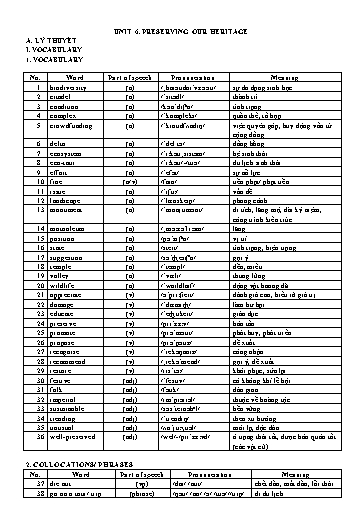
 39. lead to (vp) /liːd/ /tuː/ dẫn đến
 40. pass down from (vp) /pɑːs/ /daʊn/ /frɒm/ truyền lại
 41. set up (vp) /set/ /ʌp/ thành lập
 42. ancient architecture (adj-n) /ˈeɪnʃᵊnt/ /ˈɑːkɪtekʧə/ kiến trỳc cổ kớnh
 43. contribute to (vp) /kənˈtrɪbjuːt/ /tuː/ đúng gúp vào
 44. express opinions (v-n) /ɪksˈpres/ /əˈpɪnjənz/ đúng gúp ý kiến
 45. get involved (vp) /ɡet/ /ɪnˈvɒlvd/ tham gia
 46. give voice to (phrase) /ɡɪv/ /vɔɪs/ /tuː/ đúng gúp, nờu lờn
 47. home to (phrase) /həʊm/ /tuː/ là nhà của
 48. proud of (phrase) /praʊd/ /ɒv/ tự hào về
 49. raise awareness of (phrase) /reɪz/ /əˈweənəs/ /əv/ nõng cao nhận thức về
 50. related to (phrase) /rɪˈleɪtɪd/ /tuː/ liờn quan tới
 51. show interest in (phrase) /ʃəʊ/ /ˈɪntrest/ /ɪn/ thể hiện sự quan tõm đến
 52. take action (v-n) /teɪk/ /ˈổkʃᵊn/ hành động
 53. cultural heritage (adj-n) /ˈkʌlʧᵊrᵊl/ /ˈherɪtɪʤ/ di sản văn húa
 54. cultural importance (adj-n) /ˈkʌlʧərəl/ /ɪmˈpɔːtəns/ giỏ trị văn hoỏ
 55. cultural programme (adj-n) /ˈkʌlʧᵊrᵊl/ /ˈprəʊɡrổm/ chương trỡnh văn húa
 56. cultural value (adj-n) /ˈkʌlʧərəl/ /ˈvổljuː/ giỏ trị văn hoỏ
 57. field trip (np) /fiːld/ /trɪp/ chuyến đi thực tế
 58. folk culture (adj-n) /fəʊk/ /ˈkʌlʧə/ văn hoỏ dõn gian
 59. folk dancing (adj-n) /fəʊk/ /ˈdɑːnsɪŋ/ mỳa dõn gian, dõn vũ
 60. folk singing (adj-n) /fəʊk/ /ˈsɪŋɪŋ/ hỏt dõn gian
 61. folk song (adj-n) /fəʊk/ /sɒŋz/ dõn ca
 62. harsh punishment (adj-n) /hɑːʃ/ /ˈpʌnɪʃmənt/ hỡnh phạt hà khắc
 63. have a keen interest (phrase) /hổv/ /ə/ /kiːn/ /ˈɪntrɪst/ rất quan tõm đến
 in /ɪn/
 64. heritage crime (np) /ˈherɪtɪʤ/ /kraɪm/ tội phạm về di sản
 65. heritage site (np) /ˈherɪtɪʤ/ /saɪt/ di sản
 66. historical site (adj-n) /hɪˈstɒrɪkᵊl/ /saɪt/ di tớch lịch sử
 67. limestone mountain (np) /ˈlaɪmstəʊn/ /ˈmaʊntɪn/ nỳi đỏ vụi
 68. mass tourism (np) /mổs/ /ˈtʊərɪzᵊm/ du lịch đại trà
 69. mixed heritage site (np) /mɪkst/ /ˈherɪtɪʤ/ /saɪt/ di sản hỗn hợp
 70. natural beauty (adj-n) /ˈnổʧᵊrᵊl/ /ˈbjuːti/ vẻ đẹp tự nhiờn
 71. natural importance (adj-n) /ˈnổʧrəl/ /ɪmˈpɔːtəns/ giỏ trị tự nhiờn
 72. non-profit (np) /nɒn/-/ˈprɒfɪt/ tổ chức phi lợi nhuận
 organisation /ˌɔːɡənaɪˈzeɪʃᵊn/
 73. original state (adj-n) /əˈrɪʤᵊnᵊl/ /steɪt/ trạng thỏi nguyờn vẹn ban
 đầu
 74. pedestrian street (np) /pɪˈdestrɪən/ /striːt/ phố đi bộ
 75. performing arts (np) /pəˈfɔːmɪŋ/ /ɑːts/ nghệ thuật biểu diễn
 76. tourism activity (np) /ˈtʊərɪzᵊm/ hoạt động du lịch
 77. tourist destination (np) /ˈtʊərɪst/ /ˌdestɪˈneɪʃᵊn/ điểm đến du lịch
 78. Trang An Scenic (np) /ˈsiːnɪk/ /ˈlổnskeɪp/ Khu quần thể danh lam
 Landscape /ˈkɒmpleks/ thắng cảnh Tràng An
 Complex
 79. Xoan singing (np) /ˈsɪŋɪŋ/ hỏt Xoan
3. WORD FORMATION important,...) và cỏc - The next place to explore on our trip is the ancient temple.
 từ next, last, only. Điểm tiếp theo để khỏm phỏ trong chuyến đi của chỳng ta là ngụi
 đền cổ.
 - The only way to truly appreciate the beauty of our heritage is to
 visit the historical sites in person.
 Cỏch duy nhất để thực sự đỏnh giỏ cao vẻ đẹp của di sản của
 chỳng ta là đến thăm cỏc địa điểm lịch sử một cỏch trực tiếp.
B. THỰC HÀNH
I. PRONUNCIATION
Task 1. Find the word whose underlined part differs from the other three in pronunciation in each
of the following questions.
1. A. heritage B. scenic C. restore D. preserve
2. A. folk B. propose C. promote D. recognise
3. A. festive B. wildlife C. contribute D. original
4. A. tourism B. mausoleum C. ecosystem D. unusual
5. A. traditional B. damage C. natural D. value
6. A. floating B. position C. temple D. historic
7. A. state B. ancient C. landscape D. sustainable
8. A. trending B. recognize C. imperial D. delta
9. A. limestone B. citadel C. issue D. tourist
10. A. culture B. punishment C. monument D. crowdfunding
Task 2. Find the word that differs from the other three in the position of stress in each of the
following questions.
1. A. damage B. wildlife C. promote D. value
2. A. landscape B. restore C. festive D. mountain
3. A. cultural B. heritage C. recommend D. monument
4. A. historic B. punishment C. contribute D. awareness
5. A. effort B. preserve C. propose D. complex
6. A. original B. position C. sustainable D. recognise
7. A. unusual B. importance C. crowdfunding D. performing
8. A. architecture B. traditional C. suggestion D. appreciate
9. A. imperial B. ecosystem C. activity D. condition
10. A. mausoleum B. generation C. destination D. organisation
II. VOCABULARY
Task 1. Match the words with the pictures.
1. valley
2. citadel
3. mausoleum 6. propose f. to encourage or support something
7. prevent g. to harm or destroy something
8. damage h. to charge someone an amount of money for breaking a rule or law
Task 5. Complete each sentence below with a suitable phrase from Task 4.
1. Irresponsible behaviours can _________________ the structures and artefacts at heritage sites.
2. The government will _________________ the ancient pagoda to its original state after years of neglect.
3. Local communities are working together to _________________ their cultural heritage for future
generations.
4. The city council will _________________ new guidelines for the conservation and management of
heritage sites.
5. The government is trying to _________________ the traditional performing arts and attract more
tourists.
6. Fences around the heritage site help to _________________ people from entering restricted areas.
7. The local council will _________________ tourists who drop litter or damage monuments.
8. Visitors from all over the world _________________ the unique architecture of this historic building.
Task 6. Complete each sentence with one suitable phrase (form of the verb can be changed if
necessary).
 pass down lead to set up goon die out
1. The local community decided to _________________ a volunteer group to protect the heritage site
from damage.
2. The knowledge of traditional crafts has been _________________ through generations in this region.
3. Unfortunately, if we don’t take action, some of our cultural traditions might _________________
overtime.
4. Increased tourism may _________________ negative effects on the environment surrounding heritage
sites.
5. Let’s _________________ a tour to learn more about the historical value of this site.
Task 7. Choose the correct word to complete each sentence.
1. The ancient town is home to / contribute to some of the best-preserved traditional architecture in the
country.
2. The ecosystem / eco-tour in the area must be protected from the negative effects of mass tourism.
3. The artist uses her work to bring / give voice to environmental issues.
4. The village is well-known for its folk dancing / complex, which is performed during local festivals.
5. The non-profit organisation has started a wildlife / crowdfunding campaign to raise money for
restoring the damaged heritage site.
Task 8. Complete each sentence using the correct form of the word in brackets.
1. The growth of ____________________ in the area has promoted the local economy. (TOURIST)
2. Local communities need to be ____________________ of the importance of preserving their cultural
heritage for future generations. (AWARENESS)
3. Visitors are eager to enjoy ____________________ performances that showcase the area’s traditional
music and dance. (CULTURE)
4. Efforts to ____________________ the ancient structures in this city have been made for years.
(PRESERVATION)
5. It is crucial to restore ____________________ buildings in the town because they have significant
cultural values. (HISTORY) IV. READING
Task 1. Read the following passage and mark the letter A, B, C or D to indicate the correct word or
phrase that best fits each of the numbered blanks.
 Over 250,000 protected areas (1) _________ up around 15% of the globe’s surface area. They
include World Heritage Sites, national parks, nature reserves and many other sites on land or water. These
protected areas are (2) _________ for preserving the world’s biodiversity and ecosystem functions. They
also support the well-being of millions of people.
 Protected areas are increasingly under threat because of global change. These include (3)
_________, climate change and biological invasions caused by invasive alien species. Invasive alien
species are organisms that are moved by humans to new regions (4) _________ they traditionally don’t
occur. For various reasons, these species spread uncontrollably and can negatively (5) _________ their
new environments.
 Invasive alien species are (6) _________ of the leading threats to biodiversity in protected areas
globally. For example, in South Africa, invasive tree species on Table Mountain National Park are
changing naturally occurring fire and water systems. Managing invasive alien species is also a huge
financial burden (7) _________ many protected areas.
 A team of researchers and managers (8) _________ in invasion science have been monitoring
invasive alien species in World Heritage Sites across the world. When reviewing documents about
invasions in these sites, we found reports were hard (9) _________ because no systematic method of
reporting was followed. (10) _________, we developed a new framework to guide monitoring and
reporting of invasive alien species in natural World Heritage Sites globally.
 Adapted from https://theconversation.com/weve-developed-a-framework-to-help-world-heritage-sites-
 manage-invasive-species-147804
1. A. make B. get C. set D. turn
2. A. trending B. crucial C. harsh D. inessential
3. A. pollutant B. polluted C. pollute D. pollution
4. A. when B. where C. which D. why
5. A. effective B. effect C. affect D. effectively
6. A. one B. each C. any D. every
7. A. at B. with C. from D. for
8. A. worked B. to work C. working D. work
9. A. comparing B. to comparing C. to be compared D. to compare
10. A. Moreover B. Therefore C. However D. Otherwise
Task 2. Read the passage and decide whether the following statements are true (T), false (F) or not
given (NG).
 Our present is connected with our past, our sense of identity shaped by the cultural legacies of our
ancestors. That’s why organisations such as UNESCO exist to protect the cultural heritage of the world
for current and future generations.
 Recent years have all too clearly shown the need for that protection, with wars leading to the
destruction of many ancient monuments, while others are lost to natural disasters, cultural crime and
neglect. What can we do to prevent the loss of precious cultural heritage in the future?
 One way to preserve ancient monuments at least in a sense is to protect heritage using digital
means such as laser scanning to create 3D models. While this approach often requires specialist imaging
equipment, another approach is to use something that we already have a lot: the effort, curiosity and
holiday photographs of millions of travellers worldwide. Curious Travellers is a project launched by
researchers from the universities of Bradford, st Andrews, Nottingham Ningbo China and Birmingham,
alongside international heritage consultancy MOSPA, that aims to preserve a record of sites and
monuments in 3D digital form, built not from specialist scans but from tourist snaps. 3. According to paragraph 1, what are the three main threats to heritage sites?
 A. Tourism, development projects, and wars
 B. Wars, natural disasters, and development projects
 C. Natural disasters, tourism, and armed conflicts
 D. Armed conflicts, climate changes, and natural disasters
4. The word ‘wiped out’ in paragraph 2 is closest in meaning to _________.
 A. preserved B. prevented C. damaged D. protected
5. The word ‘their’ in paragraph 2 refers to _________.
 A. the Nazis’ B. monuments’ C. the Jewish’s D. attacks’
6. Which region or country is NOT mentioned as a location where heritage destruction has occurred?
 A. Iraq B. Libya C. Syria D. Kenya
7. According to paragraph 2, what is TRUE about the destruction of monuments in Mali?
 A. It is the primary focus of the conflict.
 B. It is the result of violence against human lives.
 C. It is limited to heritage sites and doesn’t affect human lives.
 D. It is not as serious as the destruction in Syria.
8. According to paragraph 3, why should countries consider the UNESCO Conventions from 1954 and
1972?
 A. to update and revise their own heritage policies
 B. to reflect on the history of heritage conservation
 C. to offer guidance on the preservation of heritage resources
 D. to address issues related to damaged heritages
9. Which of the following can be inferred from the passage about the destruction of heritage sites?
 A. It is primarily limited to African countries.
 B. It is a reflection of systemic violence in Africa.
 C. It is not a serious concern for international agencies.
 D. It is mainly caused by natural disasters.
10. Which of the following is NOT true according to the passage?
 A. UNESCO has been successful in protecting heritage resources during conflicts.
 B. The destruction of heritage is not only a problem within African states.
 C. ISIS is responsible for the destruction of heritage and history in Iraq.
 D. The 1954 Convention focuses on the protection of cultural heritage during conflict and war.
V. WRITING
Task 1. Complete each sentence using the given words/phrases. Change the form of the verb if
necessary.
1. Promote / eco-tourism / great / way / preserve / local wildlife.
_____________________________________________________________________________________
2. best / thing / do / Hoi An / is / to take / boat trip / Thu Bon River.
_____________________________________________________________________________________
3. One / most / well-known / heritage sites / visit / Viet Nam / My Son Sanctuary.
_____________________________________________________________________________________
4. Tourists / enjoy / go on / eco-tour / explore / beautiful landscape / of / region.
_____________________________________________________________________________________
5. They / organise / ideas competitions / encourage / young people / appreciate / their / cultural heritage.
_____________________________________________________________________________________
_____________________________________________________________________________________
Task 2. Combine these sentences using to-infinitive clauses.
1. My brother joined our family trip to Hue. He was the youngest person who did so.
-> My brother _________________________________________________________________________
File đính kèm:
- bai_tap_tieng_anh_lop_11_global_success_unit_6_preserving_ou.doc
 1. GS11_L_Unit 6 Task 1.mp3
- 2. GS11_L_Unit 6 Task 2.mp3
- 3. GS11_S_Unit 6 Task 1.mp3
- 4. GS11_S_Unit 6 Task 2.mp3
- UNIT 6. PRESERVING OUR HERITAGE - KEY.doc


